Launching a new real estate business is one thing, but launching it with clarity, intention, and a clear point of view is something else entirely.
In this post, we’re sharing the story behind a real estate brand and website design project for the Land Legacy Collective, a business built around generational living, land ownership, and a lifestyle-first approach to real estate. From the very beginning, this project was about more than selling property. It was about creating a brand and website that could communicate what makes this business different, and resonate with decision makers across multiple generations.
You’ll get a behind-the-scenes look at the strategy, design decisions, and thinking that went into launching a first-time brand, why we chose the direction we did, and how intentional brand and website design can create a foundation built to grow with a business over time.
Let’s walk through how it all came together.
Introducing the Land Legacy Collective
Some projects stand out right away, and this was one of them.
The Land Legacy Collective came to life as a first-time brand and website launch for a real estate business that does not fit neatly into the traditional mold. Founded by Ali Eastburn, with support from her son Trevor Holland, this business was built around a clear vision from the very beginning. That clarity made all the difference.
Trevor initially discovered Makena Creative through a Facebook group, and from there, things moved quickly. We were on a sales call the next day, talking through not just what they wanted their website to look like, but what they wanted their business to stand for. It was clear right away that this was not about listing homes and moving on. The Land Legacy Collective is rooted in the idea of land ownership as a long-term investment, one that supports generational living, homesteading, and building a lifestyle that lasts.
From a real estate brand and website design perspective, this was exciting. Ali and Trevor already understood their differentiator, even as a new business. They were not trying to be everything to everyone. Instead, they were focused on a very specific type of client who values land, legacy, and long-term thinking. That kind of alignment is something we do not always see, especially in real estate, and it set the tone for the entire project.
Another unique aspect of the Land Legacy Collective is how they operate alongside other real estate professionals. While they do offer real estate services, they can also step into a consulting role, working collaboratively rather than competitively. This required thoughtful brand and website design choices that positioned them as knowledgeable, trustworthy guides rather than traditional agents pushing a sale.
Because the business serves families making big, multi-generational decisions, the brand needed to feel welcoming and credible across age groups. In many cases, the younger generation may be doing the research and discovering the business online, while a parent or grandparent is the one making the final financial decision. That meant the website had to feel professional and established, but still warm, accessible, and easy to understand.
This was also a launch project with room to grow. Some of the more innovative ideas Ali and Trevor have for the future, including technology integrations and expanded offerings, are not fully visible on the site yet. That was intentional. The goal was to create a strong foundation that could evolve as the business grows, without boxing them into something too narrow or trendy.
From the start, the Land Legacy Collective was about more than real estate. It was about creating something meaningful and lasting, both for their clients and for their own business. That clear sense of purpose is what made this project such a strong example of how intentional brand and website design can support a vision from day one.
So how do you take a concept like this and translate it into a visual identity and website that feels timeless, trustworthy, and built to grow with the business? That is where the strategy behind the design really begins.
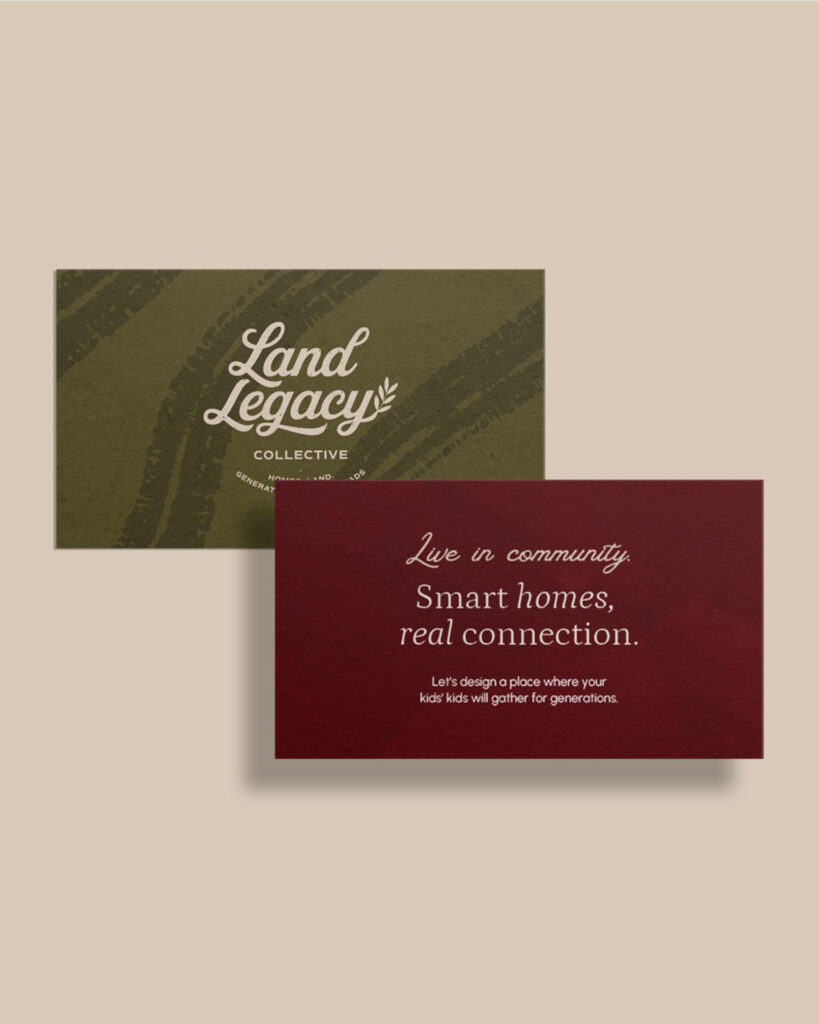
The Vision Behind a New Kind of Real Estate Business
From the very first conversation, it was clear that the Land Legacy Collective was not trying to fit into the typical real estate box. While many real estate brands focus on speed, volume, or market dominance, this business was rooted in something much deeper. The vision was centered on land as a lifestyle choice, not just a transaction.
At its core, the Land Legacy Collective exists to help families think long term. This includes homesteading opportunities, generational land ownership, and properties designed to support multiple generations living on the same land. That distinction shaped every decision we made throughout the real estate brand and website design process. The website needed to communicate that this was not about quick deals. It was about intentional living and thoughtful planning.
One of the most interesting parts of this project was understanding how their audience makes decisions. In many cases, the younger generation is the one researching options, discovering businesses online, and sharing links with their family. At the same time, the final decision often rests with a parent or grandparent who is thinking about retirement, legacy, and long-term investment. That meant the brand and website had to speak to more than one person at once.
To do that, the messaging needed to feel clear and welcoming, without oversimplifying the offering. We focused on language that felt warm and informative, while still establishing credibility and professionalism. The goal was to help every visitor quickly understand what makes the Land Legacy Collective different, regardless of which generation they belong to.
Another key part of the vision is how Ali and Trevor approach their role in the real estate process. Rather than positioning themselves solely as agents, they operate in a more consultative way. They collaborate with other real estate professionals and bring a broader perspective to each project. This approach allows them to guide clients through complex decisions without pressure or unnecessary urgency.
From a branding and website design standpoint, this meant avoiding anything that felt pushy or transactional. The site needed to educate first, build trust second, and invite conversation last. That sequence is especially important for businesses offering high-investment services where confidence and alignment matter more than speed.
The Land Legacy Collective also has forward-thinking ideas about technology and future offerings that will eventually become part of their client experience. While those elements are not front and center on the site yet, the website was designed with flexibility in mind. It can grow and adapt as those ideas are fully developed, without requiring a complete overhaul.
This vision required a real estate brand and website design approach that balanced tradition with modern clarity. The end result needed to feel timeless, not trendy, and broad enough to resonate with a wide audience while still being deeply specific in its purpose.
When a business has this level of clarity early on, design becomes less about decoration and more about translation. The next step was figuring out how to visually communicate that vision in a way that feels both approachable and enduring.
Strategic Goals for the Brand and Website
With a clear vision in place, the next step was defining what the brand and website actually needed to accomplish. For the Land Legacy Collective, this was not about checking boxes or following a standard real estate website formula. The strategy had to support their unique positioning and create clarity for a very specific type of client.
One of the primary goals of this real estate brand and website design project was differentiation. From the outside, many real estate businesses can look and sound the same. Similar language, similar visuals, and similar promises tend to blur together. Ali and Trevor knew they were offering something different, and the website needed to communicate that quickly and confidently.
That meant leading with education and intention rather than listings or sales language. Visitors needed to understand, within the first few moments on the site, that the Land Legacy Collective focuses on land, lifestyle, and long-term planning. The brand had to make it clear that this business serves families who are thinking beyond a single purchase and instead looking toward generational impact.
Another important goal was building trust across multiple decision makers. Because their ideal clients often include more than one generation, the website needed to feel credible and professional without feeling cold or intimidating. We wanted younger visitors to feel comfortable exploring and sharing the site, while older visitors felt reassured by the level of thought, care, and experience behind the brand.
Clarity was also a major focus. When a business operates differently than expected, confusion can quickly become a barrier. The website needed to explain how the Land Legacy Collective works, what role they play in the real estate process, and how they collaborate with other professionals. This required thoughtful content structure and messaging that answered questions before they were even asked.
From a design standpoint, another strategic goal was longevity. This was a first-time brand launch, but it was never meant to feel temporary. The brand and website were designed to serve as a foundation that could grow alongside the business. That meant avoiding overly trendy design choices and instead focusing on elements that would age well and adapt to future offerings.
Flexibility was key here. While not every future service or technology integration is live yet, the website structure allows for growth without disruption. New pages, expanded offerings, and evolving messaging can be added without losing cohesion or clarity. This is one of the biggest advantages of investing in intentional brand and website design early on.
Finally, the website needed to support conversation, not pressure. The goal was not to push visitors into immediate action, but to invite them into alignment. The design and messaging were created to encourage thoughtful inquiry and build confidence in the Land Legacy Collective as a trusted guide, rather than a transactional service provider.
When brand and website strategy are aligned this closely with a business’s goals, the result is more than a polished online presence. It becomes a tool that supports growth, confidence, and clarity from day one. With those goals defined, the next step was translating strategy into a visual identity that felt just as intentional and enduring.
Brand Identity Design for the Land Legacy Collective
Once the strategic goals were clear, the focus shifted to creating a brand identity that could bring the Land Legacy Collective’s vision to life. This part of the real estate brand and website design process was all about translating values into visuals, without relying on clichés or overly literal symbolism.
From the beginning, we knew the brand needed to feel grounded, timeless, and welcoming. This business serves families making significant, long-term decisions, often across multiple generations. The brand identity needed to feel familiar and trustworthy, while still standing apart from traditional real estate branding that often leans overly modern or transactional.
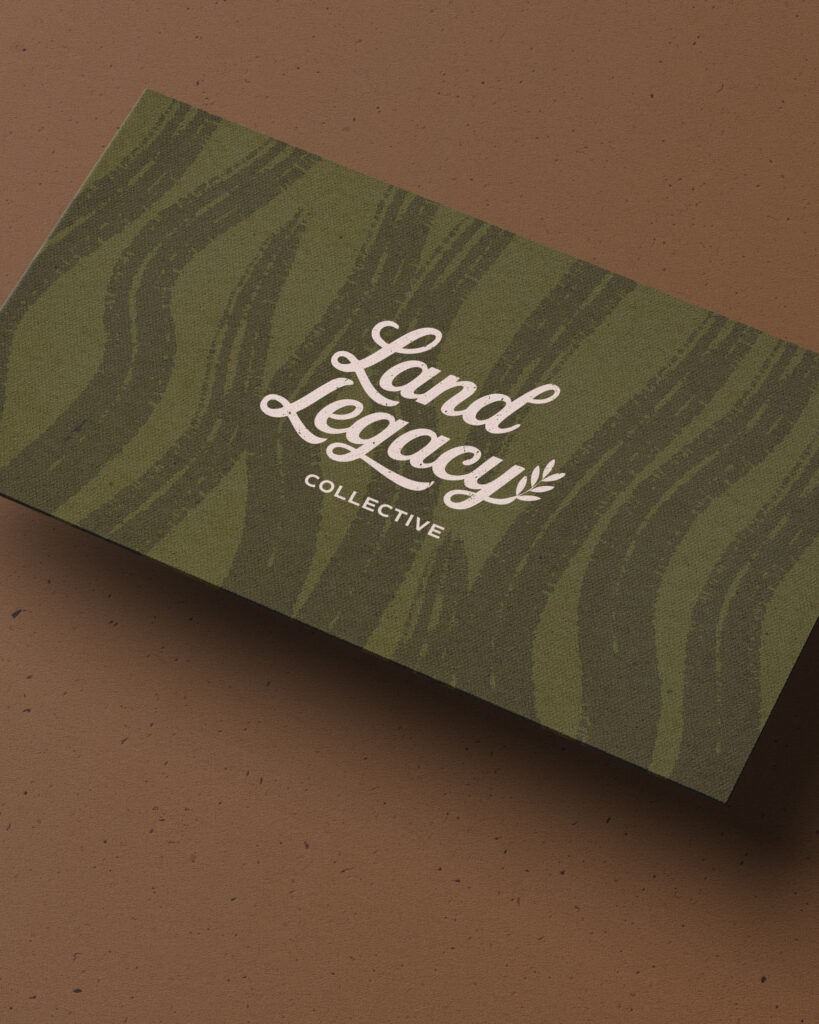
We leaned into a visual direction that felt outdoorsy and heritage-inspired, with a subtle vintage influence. The goal was not to look old-fashioned, but to evoke a sense of permanence and care. Think warmth, craftsmanship, and intention rather than trends that might feel dated in a year or two. This approach allowed the brand to resonate with both younger and older audiences without alienating either group.
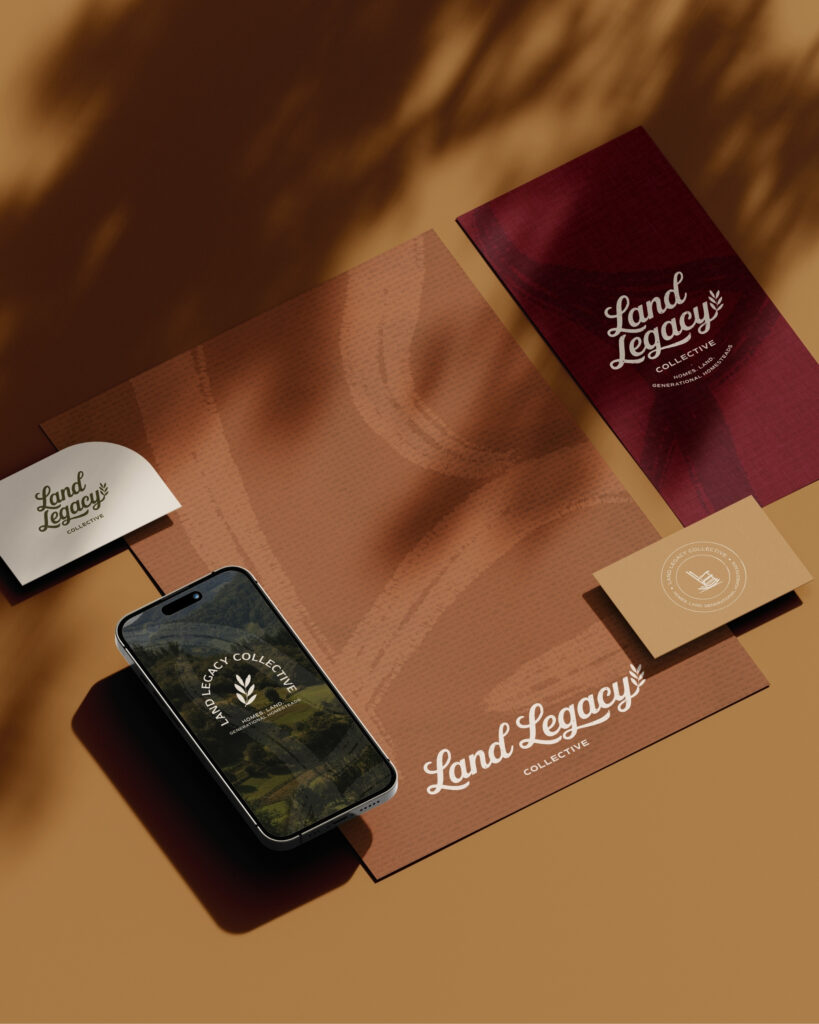
One of the most meaningful elements of the brand identity is the logo mark. In real estate, it is incredibly common to see roofs, houses, or generic location pins used as symbols. That was something we were very intentional about avoiding. The Land Legacy Collective is not just about selling property, so the brand mark needed to reflect something deeper.
We introduced a rocking chair as a central visual element, and it immediately clicked. The rocking chair represents rest, legacy, and continuity. It is a symbol often associated with front porches, family gatherings, and time spent together across generations. For this brand, it became a quiet but powerful way to communicate what the business stands for without being overly on the nose.
The color palette and typography were chosen to support this same feeling. Earthy tones and muted neutrals help ground the brand and connect it back to land and nature. The typography balances readability with personality, ensuring the brand feels professional and polished without becoming stiff or unapproachable. Every element was selected to work together as a cohesive system, not as individual design moments.
Because this was a first-time brand launch, flexibility was also a priority. The brand identity needed to work across the website, future marketing materials, and potential collaborations, all while leaving room for the business to evolve. The system we created allows for expansion without losing consistency, which is essential for a business with long-term growth in mind.
In the context of real estate brand and website design, this kind of intentional identity work does more than look good. It helps establish credibility, build trust, and communicate values before a single conversation ever happens. For the Land Legacy Collective, the brand identity became a visual foundation that supports their mission and sets the tone for every interaction.
With the brand identity in place, the next step was bringing it to life online through a website that could carry the same clarity, warmth, and strategic purpose.
Website Design Strategy and Execution
With a clear brand identity in place, the focus shifted to how that brand would live and breathe online. The website needed to do more than look good. It needed to communicate the Land Legacy Collective’s differentiator quickly, build trust with multiple generations, and create space for the business to grow.
This is where the real estate brand and website design strategy became especially important.
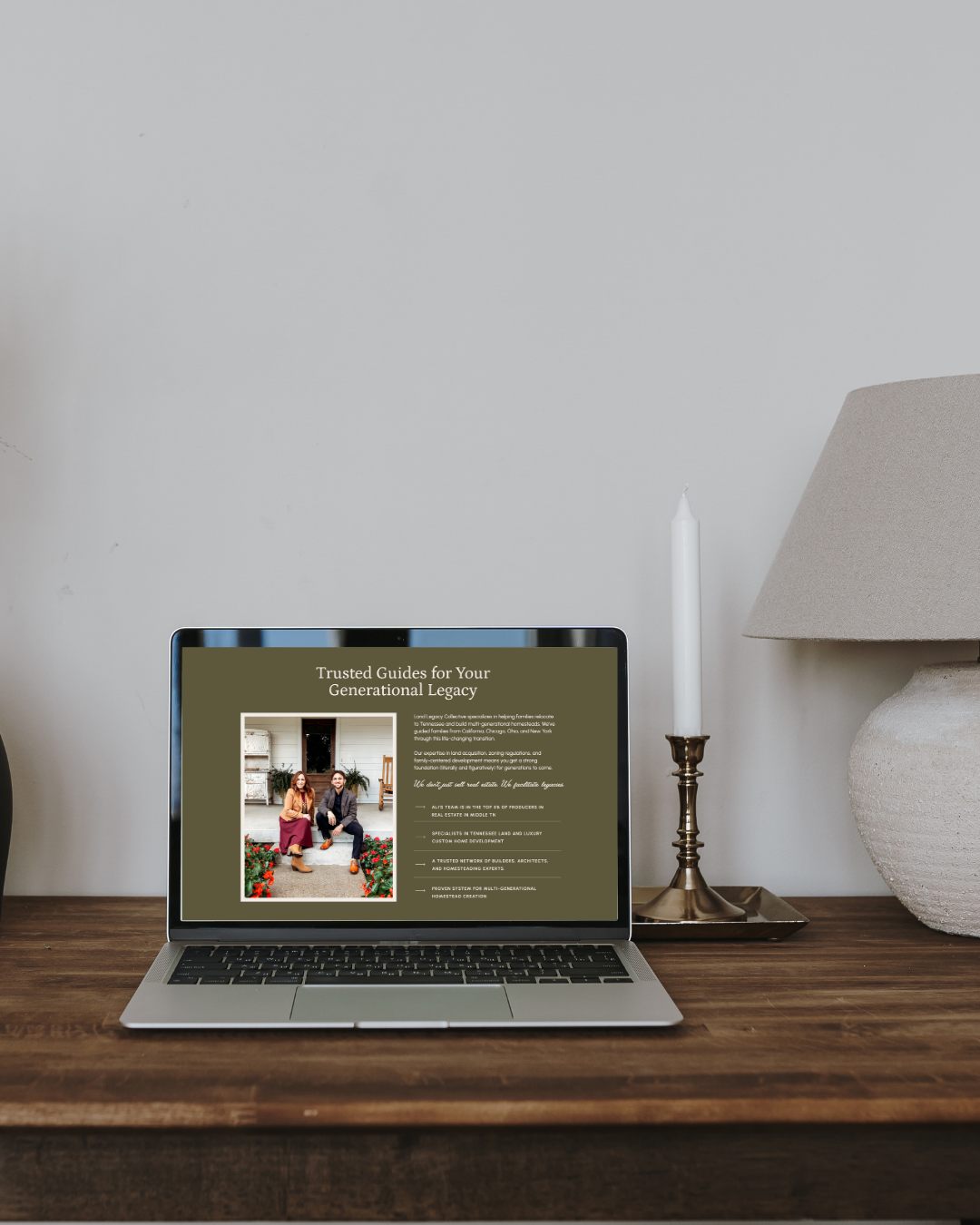
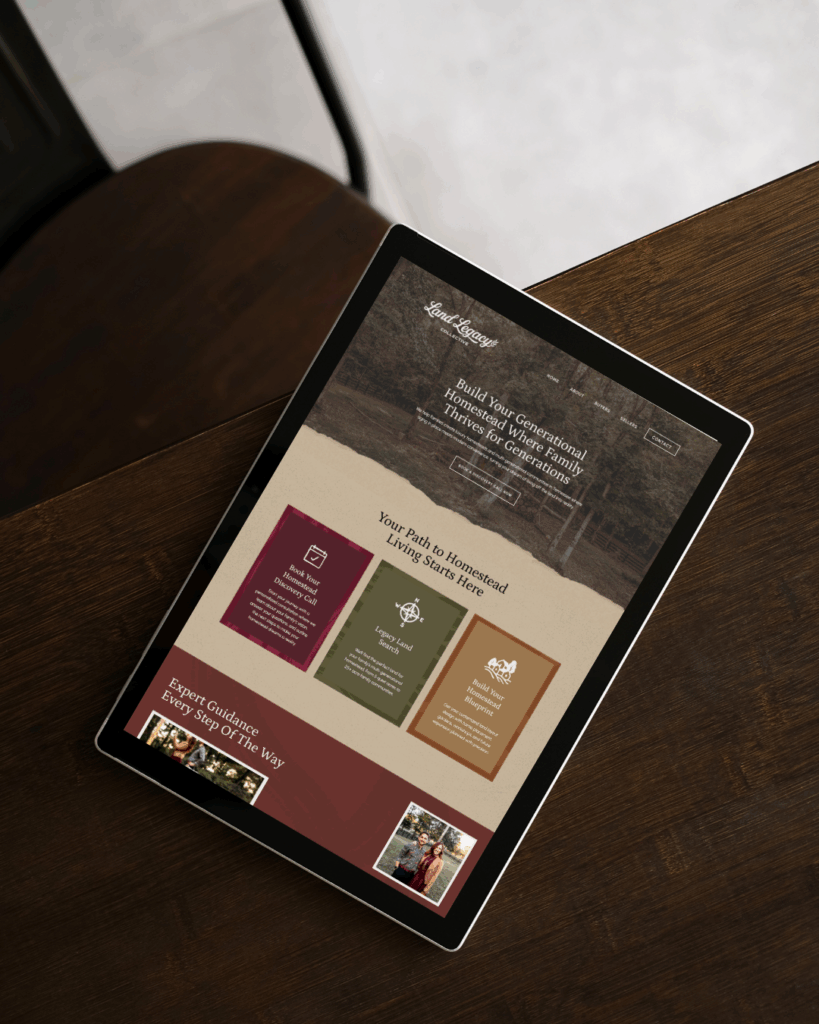
We built the site on Showit, which gave us the flexibility to fully customize the design while still keeping the backend user-friendly. For a new business with big plans, this was a smart choice. The platform allows for visual storytelling without locking the client into something rigid or overly technical. It also means the website can evolve as new offerings, services, and ideas come to life.
Interested in our Showit website design services? I’d love to chat!
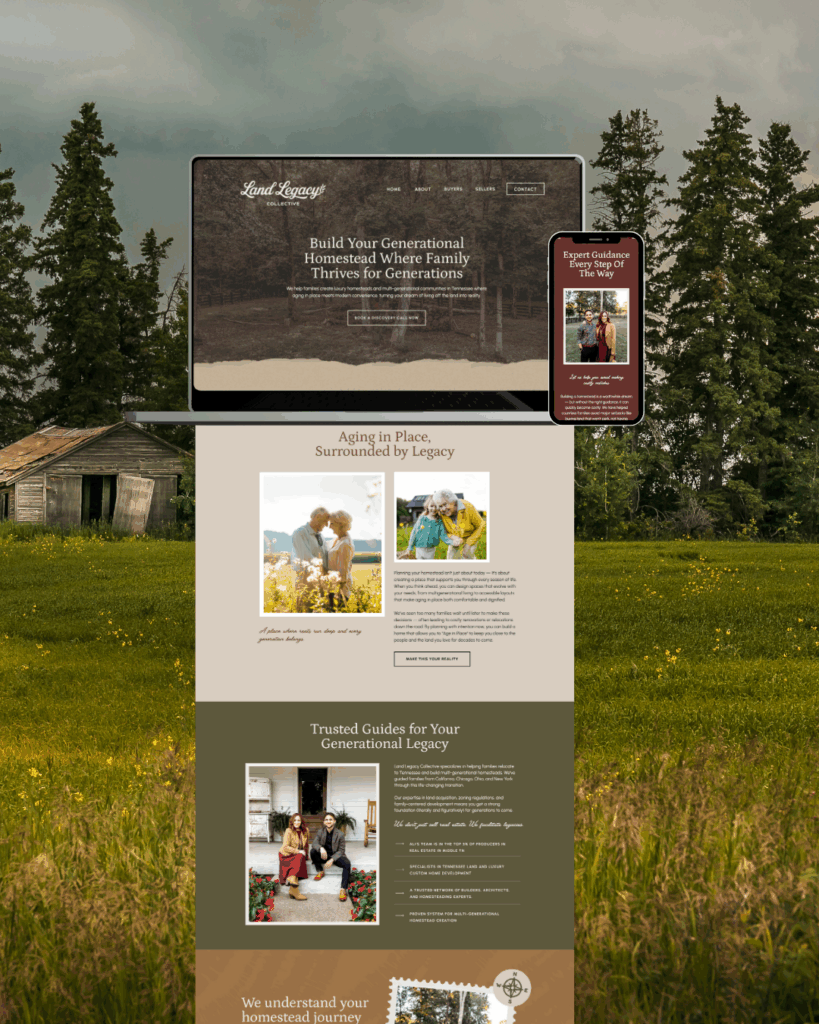
From a structure standpoint, the website was designed to educate first. Rather than leading with listings or traditional real estate language, the messaging guides visitors through what makes the Land Legacy Collective different. The layout encourages people to slow down, read, and understand the lifestyle-focused approach behind the business.
The flow of the site was carefully mapped to support clarity. Each section builds on the next, answering common questions before they turn into hesitation. What do they offer. Who is this for. How do they work alongside other real estate professionals. Why does this approach matter. By addressing these questions upfront, the website creates confidence without overwhelming the visitor.
Design-wise, we carried the brand’s warmth and timelessness through every page. Generous spacing, thoughtful typography, and a balanced layout help the site feel calm and approachable. Nothing feels rushed or cluttered, which is especially important for an audience spanning multiple age groups.
We also made sure the website was built with longevity in mind. This is not a site that will need to be redesigned every time the business grows. The structure allows for new pages, expanded services, and future integrations without disrupting the overall experience.
Throughout the build, the goal was never to push visitors toward immediate action. Instead, the website invites conversation. It positions the Land Legacy Collective as a knowledgeable guide who understands the weight of the decisions their clients are making.
When brand strategy and website execution work together this seamlessly, the result is a site that supports the business instead of complicating it. The next question becomes how this approach compares to more traditional options.
Custom Design vs Templates for Real Estate Brands
One of the most common questions that comes up during any real estate brand and website design project is whether a custom build is really necessary. Templates are everywhere. They are accessible, affordable, and often a great starting point. The key is understanding when a template supports your business and when it starts to hold it back.
Templates often make sense in the early stages of a business. If you are testing an idea, launching something new, or working within a tight budget, a template can help you get online quickly without a large upfront investment. DIY works until it does not, and there is nothing wrong with starting there.
The challenge with templates tends to show up as a business becomes more defined. Most templates are built to work for a wide range of industries and use cases. That means your content often has to adapt to the layout instead of the layout being designed around your message.
Custom real estate brand and website design takes the opposite approach. Instead of starting with a pre-built structure, the design begins with your business goals, your audience, and your differentiator.
In the case of the Land Legacy Collective, this distinction mattered. Their business is not centered around traditional listings or fast-paced transactions. It focuses on land, lifestyle, and long-term planning across generations. A template could have made it difficult to tell that story without feeling forced or overly generic.
Another important factor is flexibility. Templates can feel restrictive as your business grows. Adding new services, expanding your messaging, or adjusting your positioning often requires workarounds or compromises. With custom website design, the structure is built to evolve.
It is also worth noting that custom design does not mean complicated. Many custom real estate websites are built on platforms like Showit, which allows business owners to make updates without touching code.
The decision between templates and custom design is not about what is better in general. It is about what is right for your business right now.
So how do you know when you are ready to make that shift?
Common Objections We Considered During This Project
Any time a business invests in real estate brand and website design, especially at the beginning, there are natural questions and hesitations that come up.
One of the most common objections we see is the idea that a new business should wait before investing in custom design.
Another concern was whether custom brand and website design would feel like too much for a business that is still evolving.
We also considered the concern around broad appeal.
Another objection that often comes up is whether a website can truly communicate a business model that is not traditional.
There is also the question of whether templates could accomplish the same thing.
Lastly, we considered the pressure to include everything at once.
By addressing these objections thoughtfully throughout the design process, we were able to create a real estate brand and website design that feels confident, flexible, and aligned.
Frequently Asked Questions About Real Estate Brand and Website Design
Real estate brand and website design typically includes brand strategy, visual identity design, and a fully custom website built to support your business goals.
Not always, but having a clear brand makes a big difference.
Yes, Showit can be a great option for real estate businesses that want flexibility and visual storytelling.
Custom website design tends to be worth it when your business has clarity and long-term goals.
A strategically designed website absolutely can.
The Result, A Brand Built for What Comes Next
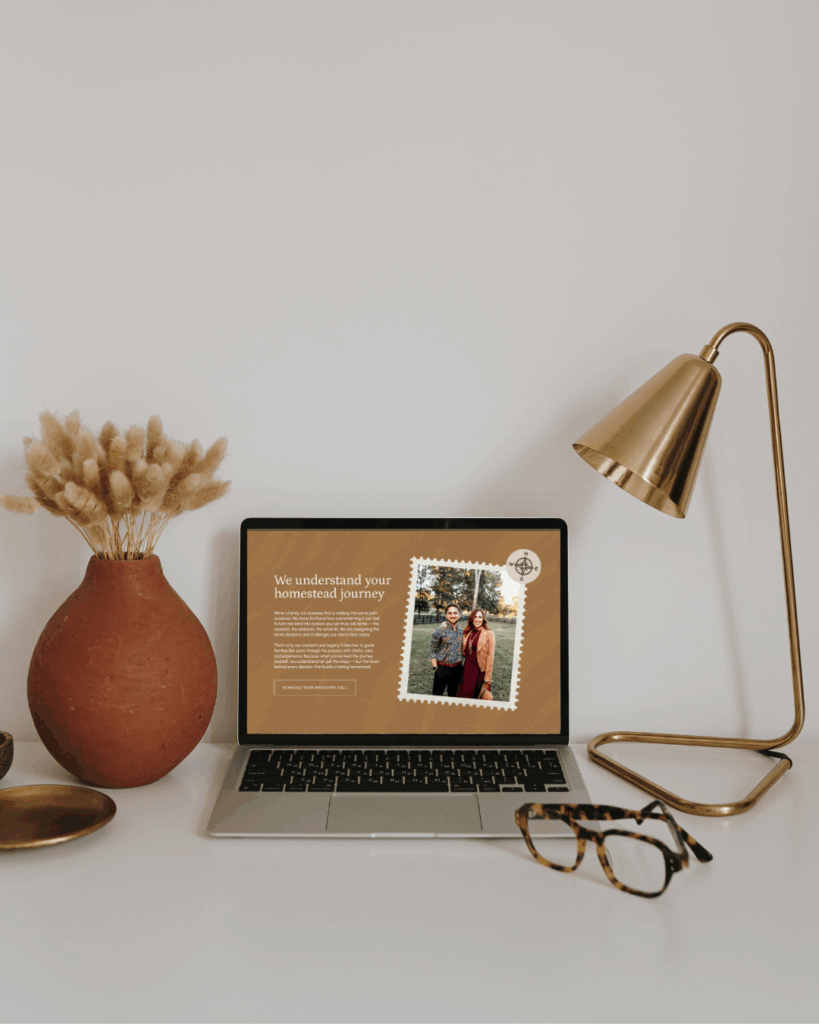
VISUAL NOTE: Final brand presentation mockups and full-page screenshots.]
With the brand identity and website fully in place, the result is a cohesive, intentional foundation that supports the Land Legacy Collective exactly where they are and where they are headed next.
The finished brand feels grounded, thoughtful, and trustworthy.
The website brings that brand to life in a way that feels calm and clear.
One of the biggest wins of this real estate brand and website design is flexibility.
Just as importantly, the brand and website give the Land Legacy Collective confidence.
From a client experience standpoint, the site now acts as an educational tool.
This project also created a strong starting point for future storytelling.
The natural next question is how this kind of foundation could support your own business.
Thinking About Your Own Real Estate Brand and Website?
If this project resonated with you, there is a good chance you are thinking about your own brand and website and wondering what the right next step looks like.
Thoughtful real estate brand and website design is not about trends or aesthetics alone.
Working with Makena Creative is about partnership, not pressure.
If you are ready to explore what intentional brand and website design could look like for your real estate business, we would love to be part of that conversation.