Let’s be honest—brand design is often misunderstood, even by smart, capable business owners.
If you’ve ever thought branding was mostly about picking colors, fonts, or a logo you love, you’re not alone. But real brand design goes much deeper than aesthetics. It’s about strategy, market awareness, and making intentional decisions that support your business long-term—not just what looks good today.
In this post, I’m pulling back the curtain on what the brand design process actually looks like, using a real client project as an example. You’ll learn what happens during discovery, why strategic tension can be a good thing, and how thoughtful brand decisions lead to stronger, more market-ready businesses.
If you’ve been curious about how branding really works behind the scenes, you’re in the right place.


Why the Brand Design Process Matters for Small Businesses
When you’re running a small business, it’s easy to treat branding like something you’ll “clean up later.” Many start with a logo they like and a few colors that feel right. That can work—for a while. But as your business grows, the cracks start to show.
Your brand is doing more work than you realize. It’s shaping first impressions, setting expectations, and influencing whether someone trusts you enough to take the next step. Before someone reads a testimonial or books a call, they’re already forming opinions based on how your brand shows up.
That’s why a strategic brand design process matters. It replaces guesswork with clarity and ensures your visuals, messaging, and tone tell the same story. The result? A more recognizable, trustworthy brand that attracts aligned clients instead of price-shoppers or mismatched leads.
It also brings clarity to you. Many clients feel more confident once their brand is rooted in strategy instead of personal taste. When you know why something was chosen, you stop second-guessing it.
Branding isn’t just about looking professional. It’s about being understood. If your audience has to work to figure out who you’re for or what you do, they’ll move on. A thoughtful brand process removes that friction.
Project Overview: Honor Her Apparel for Brave Women

Honor Her Apparel was born to fill a gap that never should’ve existed. Angie Joseph, the founder, noticed that most apparel for veterans didn’t reflect or respect women who served. Instead of waiting for change, she built it herself.
The brand needed to feel empowering, wearable, and intentional—without leaning into stereotypes. The audience spans generations and styles, which made clarity and cohesion absolutely critical.
This was a full identity project, not including a website or product design. That meant the brand had to stand on its own and work across future platforms and marketing efforts.
From the start, we focused on audience, context, and long-term growth. Our goal wasn’t just to make something Angie loved (though that matters). It was to build something her audience would feel proud to support.
The Discovery Phase: Where Strategy Actually Happens
Discovery is where everything begins. Not with logos or palettes, but with context, audience, and opportunity. This is where we talk through your vision, review inspiration, and dig deep into what feels aligned—and what doesn’t.
With Angie, we explored what she wanted women to feel when they saw the brand. We looked at other apparel brands, noted what worked (and didn’t), and used that to create clear boundaries.
This is also where strategy meets education. Sometimes ideas that feel meaningful personally might not translate well in the market—and that’s okay. Discovery gives us space to explore, align, and create clarity before we design anything at all.
When Strategy and Preference Don’t Fully Align
Every project hits a point where strategy and personal taste don’t totally match up. During this one, that moment came with the color palette.
Angie was drawn to soft pinks and greens—beautiful, but they didn’t quite connect to the veteran identity the brand was built to honor. My role wasn’t to override her preference, but to advocate for the audience and ask the right questions.
Would this direction require too much explanation? Would it still feel empowering to the women it’s meant for?
Ultimately, we refined instead of rejected. The final direction honored both Angie’s vision and the brand’s purpose—proof that tension in the process isn’t a red flag. It’s often a sign that we’re building something real.
The Final Brand Direction and Why It Works

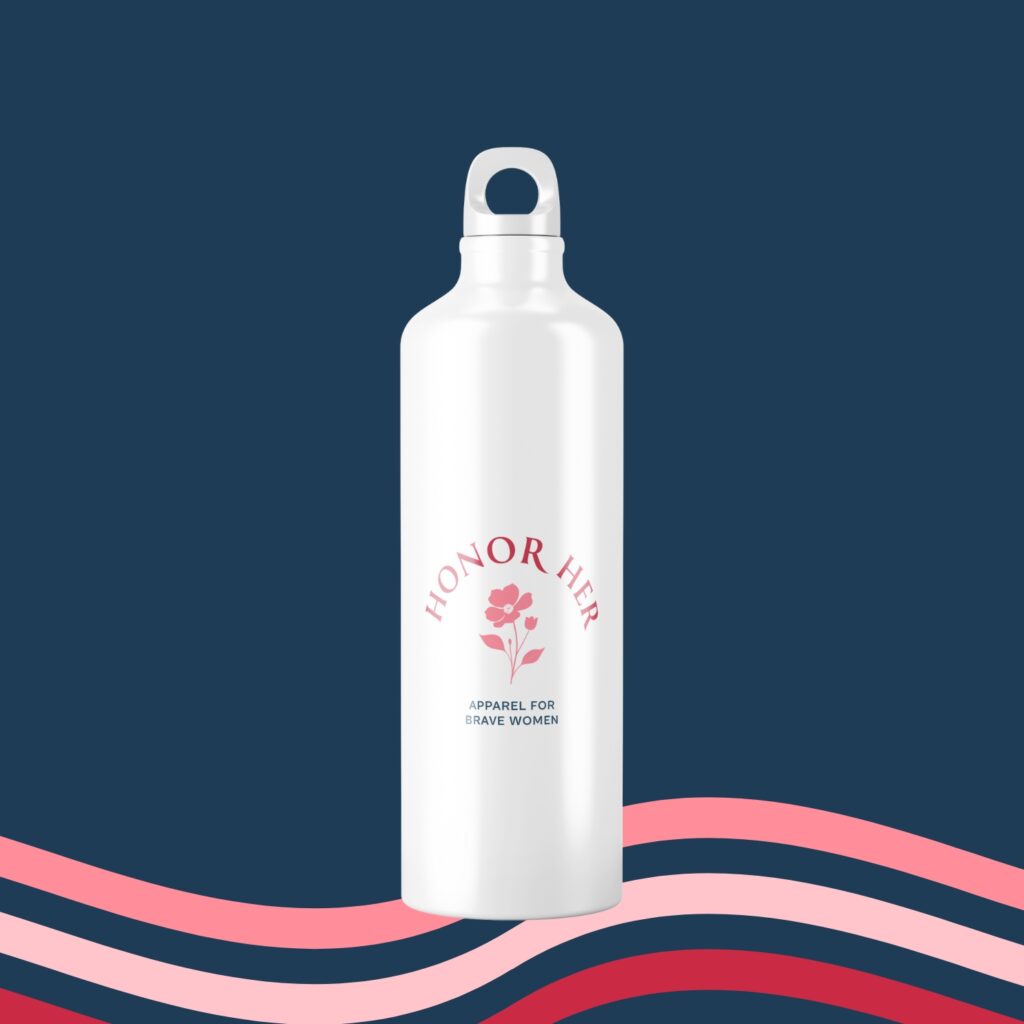
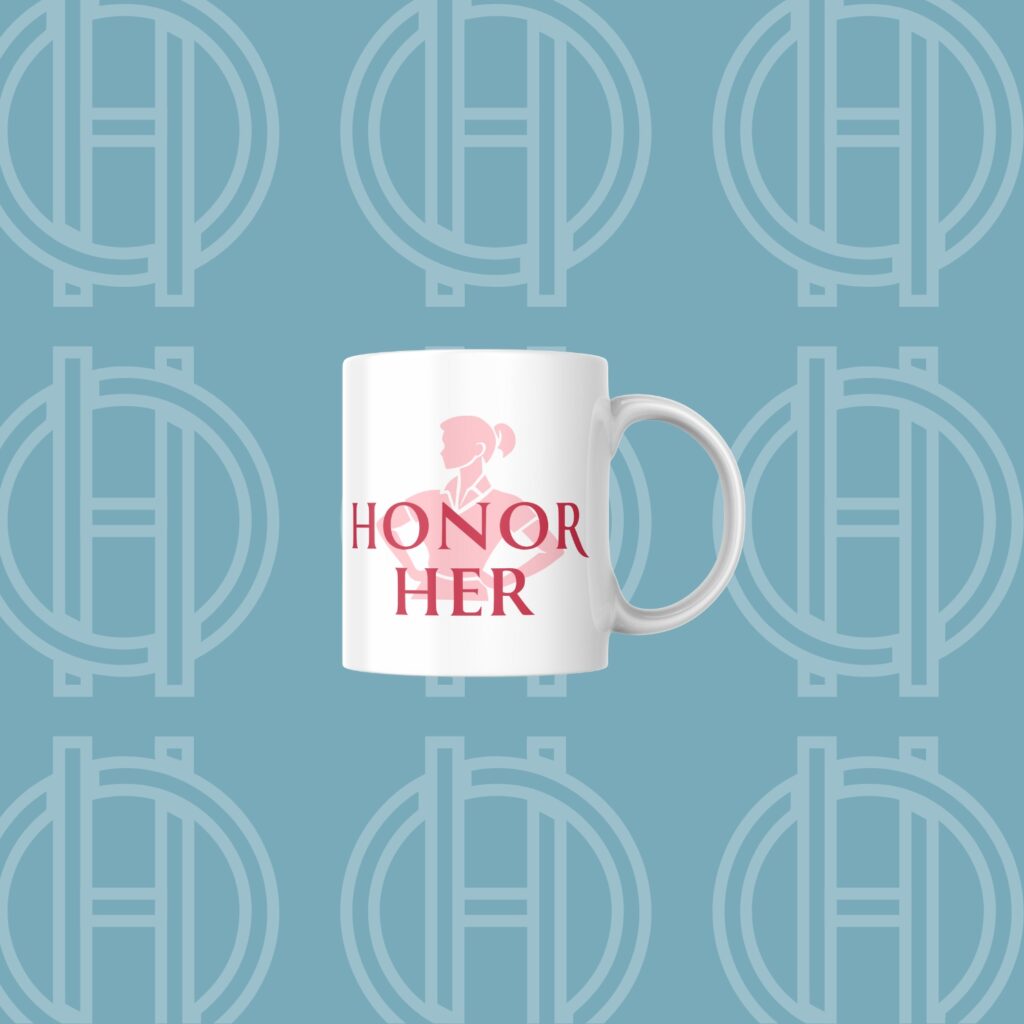
The final brand for Honor Her Apparel reflects strength, confidence, and pride—without relying on clichés. A central illustration of a woman in a power pose became the defining mark. It’s bold, feminine, and instantly recognizable.
The color palette nods to patriotism without being overly literal, and the typography strikes a balance between approachability and strength.
This direction works because it removes friction. It communicates the brand’s purpose at a glance—critical for an ecommerce business.
Best of all, it still feels like Angie. That’s the power of pairing strategy with creative vision.
Common Misconceptions About the Brand Design Process
Let’s clear a few things up:
- Branding is not just visual. Without strategy, pretty graphics are just decoration.
- It’s not just about what you like. Your taste matters, but so does what your audience needs.
- Strategy doesn’t kill creativity. It gives it a job.
- Confusion ≠ sophistication. If your audience doesn’t get it, they’ll move on.
- Branding isn’t one-and-done. A strong brand evolves, but doesn’t need constant reinvention.
- Disagreement isn’t failure. It’s part of a thoughtful, collaborative process.
Once you understand this, branding becomes less about perfection—and more about purposeful alignment.
Frequently Asked Questions About the Brand Design Process
Discovery, strategy, and identity development. That means audience research, positioning, and visuals like logos, palettes, and supporting graphics.
Most projects take several weeks, depending on scope. It’s not overnight—and that’s a good thing.
Because visuals need meaning. Strategy ensures your brand speaks clearly and confidently.
You can, but you’ll probably end up redoing things later. Strategy saves time and energy in the long run.
Not at all. Whether you’re just starting or leveling up, a strong brand supports every stage of growth.
Is a Strategic Brand Design the Right Next Step for You?
If your visuals no longer match the level of your work—or if you’re unsure how your brand is being perceived—it might be time for a reset.
At Makena Creative, we treat branding as a partnership. Our job is to advocate for both you and your audience. The result is a brand that feels like you, functions with clarity, and supports your business as it grows.
If you’re ready to explore a more strategic approach to branding, let’s chat. I’d love to hear what you’re building and see what’s possible together.