What Is Custom Website Design? (And What It’s Not)
Let’s be honest: “custom website design” gets thrown around a lot, and it doesn’t always mean the same thing everywhere. When most people ask custom website design what’s included, what they’re really asking is, What am I actually paying for, and is it different from a template?
At its core, custom website design is about intention. Instead of starting with a pre-made layout and squeezing your content into it, a custom website is designed around your business, your goals, and your audience. The structure, flow, and layout are thoughtfully planned so your site works with your business, not against it.
Custom website design starts with strategy. That means understanding what you do, who you serve, and what you want your website to help you achieve. From there, decisions are made about page structure, content hierarchy, and how visitors should move through your site. Nothing is random, and nothing is added “just because.”
From a visual standpoint, custom design means your website is intentionally styled to reflect your brand, not just in colors, but in layout, spacing, typography, and overall feel. The goal isn’t to be flashy. It’s to create a professional, cohesive experience that makes people trust you and want to take the next step.
Here’s what custom website design is not: it’s not simply picking a template and swapping out text and photos. Templates can be a great option early on (DIY works… until it doesn’t, and that’s okay). But they often come with limitations when it comes to flexibility, growth, and standing out in a crowded space. Custom design removes those constraints by building the site around your content and priorities.
It’s also not about making things more complicated for you. Many custom websites are built on user-friendly platforms like Showit, which means you still get a one-of-a-kind, done-for-you website without feeling stuck or overwhelmed after launch.
Custom website design is best suited for business owners who are ready to elevate their online presence, move past DIY stress, and invest in something built to grow with them. If your website should reflect how good you are at what you do, and support where you’re headed next, custom design is often the right move.
So now that we’ve clarified what custom website design actually is (and isn’t), the next question naturally becomes: what’s included when you invest in a custom website, and how do you know if it’s worth it for your business?
What’s Included in Custom Website Design?
If you’re researching custom website design what’s included, you’re probably looking for clarity, not a vague list that leaves you with more questions than answers. While every studio approaches things a little differently, there are common elements you should expect when investing in a thoughtfully designed, done-for-you website.
Here’s what’s typically included in custom website design and why each piece matters.
First, there’s strategy and planning. Before anything is designed, time is spent understanding your business, your goals, and your audience. This phase shapes the structure of your website, how pages are organized, and how visitors move through the site. It’s what ensures your website isn’t just pretty, but actually works for you, guiding people toward inquiries, bookings, or next steps with intention.
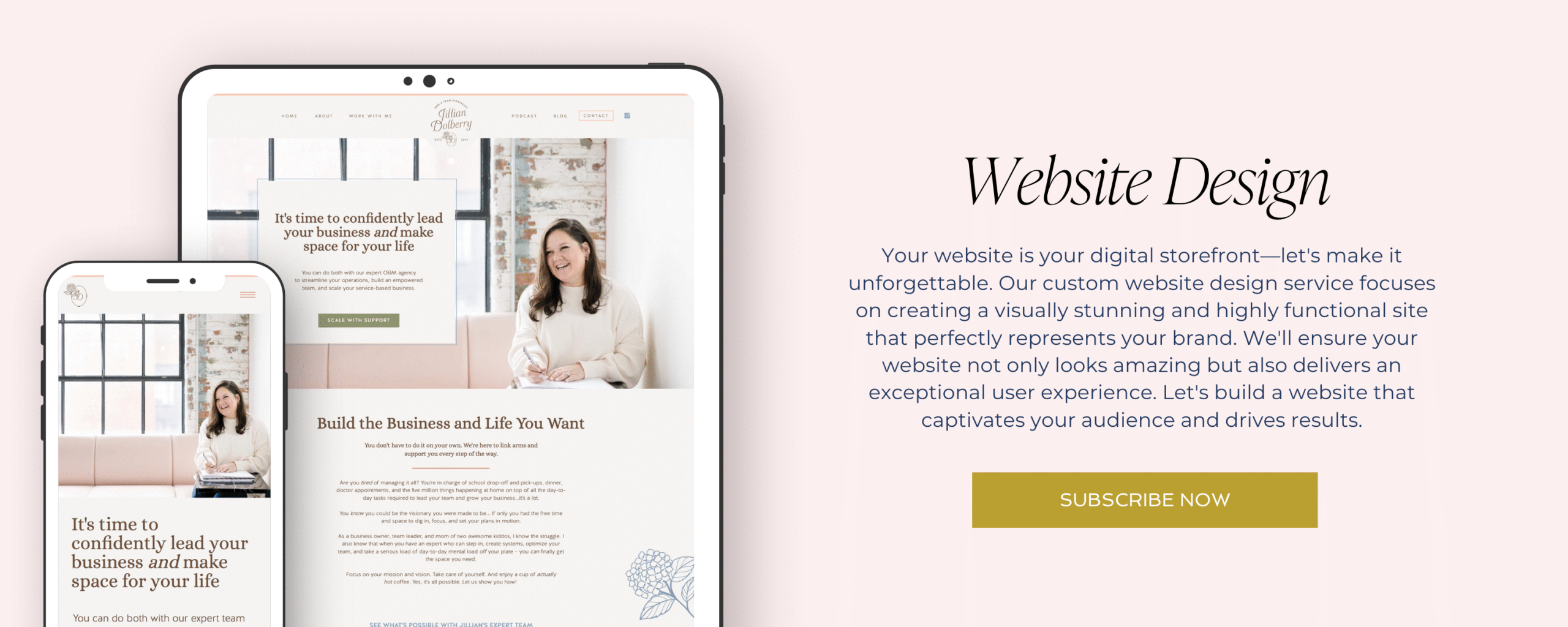
Next comes custom visual design. This is where your website really starts to feel like you. Layouts are designed specifically for your content, brand, and messaging, not pulled from a pre-made template. Typography, spacing, and visual hierarchy are chosen strategically to create a polished, professional experience that builds trust. Your site is also designed to look great on every screen, from desktop to mobile, because your audience is likely visiting from more than one device.
Page creation and build is another core piece. Most custom website design packages include the creation of key pages like a homepage, about page, services pages, and a contact page, with layouts designed to support your offers and guide users naturally through the site. Rather than forcing content into rigid sections, pages are built to highlight what makes your business unique and easy to understand.
Technical setup is also part of the process. This includes things like platform setup, connecting your domain, and making sure everything functions smoothly behind the scenes. While it’s not the most exciting part, it’s essential, and it’s one of the biggest reasons business owners choose done-for-you website design instead of DIY.
Custom website design also includes foundational SEO setup. This typically means optimizing page titles, meta descriptions, images, and site structure so your website is search-engine friendly from the start. It’s not a full SEO strategy, but it gives your site a strong foundation to build on over time.
Finally, there’s launch support and optional ongoing maintenance. Before your site goes live, it’s reviewed, tested, and polished. After launch, many designers offer a support window or longer-term website maintenance options, giving you peace of mind as your business grows and changes.
At the end of the day, custom website design is about more than a finished website, it’s about giving you clarity, confidence, and a site that truly supports your business. When you know what’s included, it becomes much easier to decide whether custom design is the right next step for you.
What’s Not Always Included in Custom Website Design
One of the most helpful parts of understanding custom website design what’s included is also knowing what isn’t always part of the package. Let’s be honest, clear expectations make for a much better experience on both sides. And while custom website design is a done-for-you service, it doesn’t automatically mean everything related to your online presence is included by default.
First, ongoing updates and long-term maintenance aren’t always standard. Many custom website design packages include a post-launch support window to make sure everything is running smoothly, but continued updates, edits, or technical maintenance may be offered separately. Some studios (like ours) offer longer-term maintenance options, while others hand things off completely after launch. Neither approach is wrong, it’s just important to know what level of support you’ll have once your site is live.
Advanced SEO is another area that’s often misunderstood. While custom website design typically includes foundational SEO setup, like page titles, meta descriptions, and clean site structure, it usually doesn’t include ongoing SEO strategy, keyword research, or blog optimization. Think of it as setting your site up for success, not managing its long-term search growth. If SEO is a major priority for you, that’s usually a separate conversation and investment.
Custom integrations can also fall outside the scope of many website design packages. Things like complex CRM setups, advanced automations, or highly customized functionality may require additional planning or collaboration with other specialists. A good designer will always tell you upfront if something falls outside the original scope and help you figure out the best next step.
Brand design is another big one worth calling out. While custom website design often works best when paired with strong branding, full brand identity design, like logo creation, visual systems, and brand strategy, is typically its own service. That separation actually benefits you, because it allows each part of your business to get the focused attention it deserves.
Check out our brand design services here!
Photography and content creation can also vary by studio. Some designers include guidance or direction, while others may require you to provide photos and content before the project begins. The key here is clarity. Knowing what you’re responsible for ahead of time helps the entire project run smoothly.
Here’s the thing: none of these exclusions are red flags. They’re simply boundaries that keep projects strategic, organized, and successful. Custom website design works best when both you and your designer know exactly what’s included, what’s optional, and what can be added later as your business grows.
Once you understand both sides of the equation, what’s included and what’s not, the decision becomes much clearer. And from there, the next question naturally becomes: how does custom website design really compare to using a template, and which option makes the most sense for you right now?
Custom Website Design vs Templates: Which Is Right for You?
Once you understand custom website design what’s included, it’s natural to start comparing it to templates. And let’s get this out of the way first, templates aren’t bad. They’re accessible, affordable, and a solid option in the early stages of business. DIY works… until it doesn’t. And realizing you’ve outgrown it is actually a good thing.
Templates are designed to work for a lot of people. You pick a layout, plug in your content, adjust a few colors and fonts, and launch. For brand-new businesses or side projects, this can be a great way to get online quickly. The tradeoff is flexibility. Templates come with built-in structure, which means you’re often adapting your content to fit the design, not the other way around.
Custom website design flips that approach. Instead of starting with a layout, it starts with your business. Your services, your audience, and your goals shape the structure of the site from the beginning. Pages are designed intentionally to support how you want people to move through your website, what you want them to notice first, and where you want them to take action.
One of the biggest differences shows up as your business grows. Template websites can start to feel restrictive when you want to add new services, adjust your messaging, or improve conversions. You might find yourself fighting the layout or stacking workaround after workaround. Custom websites are built with flexibility in mind, so they can evolve as your business does.
There’s also the matter of brand presence. Templates are often used by hundreds or thousands of businesses. Even when customized, they can start to look familiar. Custom website design gives you a one-of-a-kind layout that reflects your brand, your personality, and your level of professionalism. It’s not about being flashy, it’s about standing out in a way that feels aligned and intentional.
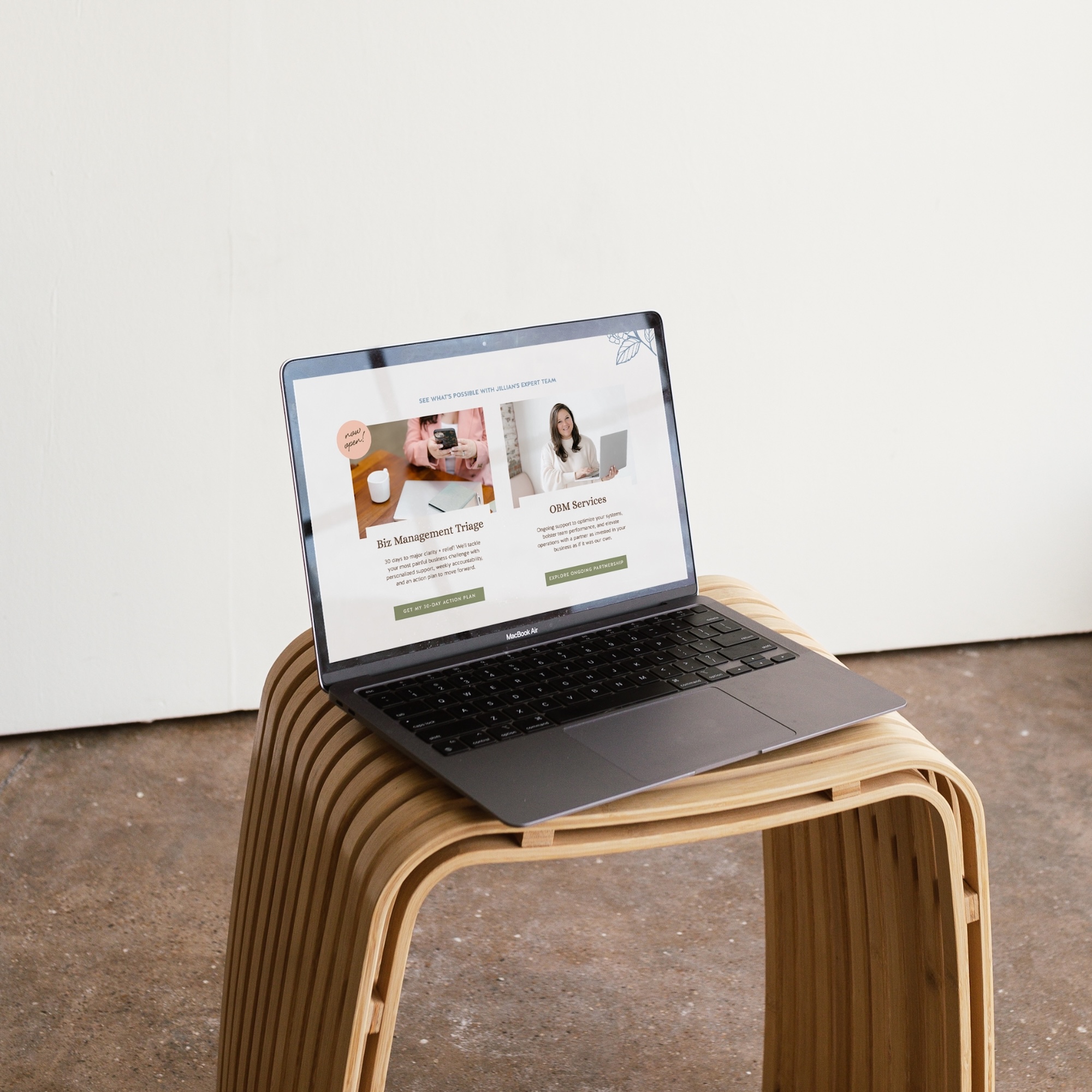
From a practical standpoint, custom websites can still be very user-friendly. Many designers build custom sites on platforms like Showit, which means you get the best of both worlds: a strategic, done-for-you build paired with the ability to make updates yourself when needed. You’re not locked out of your own website, and you’re not stuck managing everything alone.
So how do you choose? If you’re just getting started, testing an idea, or working with a very tight budget, a template might be the right fit for now. If your business is established, your services are refined, and your website needs to support real growth, custom website design is often worth the investment.
At the end of the day, the “right” option isn’t about rules, it’s about readiness. The real question is this: does your current website still support where your business is going, or is it quietly holding you back?
Is Custom Website Design Worth It?
This is usually the moment where things get real. Once you understand custom website design what’s included, the next question is almost always: okay…but is it actually worth the investment?
And honestly? The answer depends less on the website itself and more on where you are in your business.
Custom website design tends to be worth it when your business has outgrown the DIY phase. Maybe your services are refined, your client experience has leveled up, or your pricing has increased, but your website hasn’t caught up yet. If your site no longer reflects how professional or established you are, that disconnect can quietly cost you inquiries, trust, and confidence.
One of the biggest benefits of custom website design is clarity. A strategically designed site helps visitors quickly understand what you do, who it’s for, and how to take the next step. You’re not relying on people to “figure it out.” Your website does the heavy lifting for you, answering questions, building trust, and guiding decisions even when you’re not actively marketing.
There’s also a time factor that often gets overlooked. DIY websites usually require constant tinkering. You’re adjusting layouts, troubleshooting tech issues, and second-guessing design choices instead of focusing on your actual work. Custom website design gives you that time back. When your site is built intentionally from the start, you’re not patching things together later.
Another big piece is confidence, both yours and your audience’s. When your website truly reflects the quality of your work, it’s easier to show up consistently, share your link without hesitation, and feel proud of your online presence. And from your audience’s perspective, a polished, professional website builds credibility fast. People are far more likely to inquire when your site feels aligned, trustworthy, and intentional.
That said, custom website design isn’t always the right move right now. If you’re just starting out, still validating your offers, or working through major pivots, a template might be the better choice for the moment. And that’s okay. Investing in custom design too early can feel overwhelming if your business foundation isn’t quite there yet.
Where custom website design really shines is when your website needs to support growth, not just existence. If you’re booking consistent clients, ready to elevate your brand, and want a site that’s built to grow with you, custom design is often less about “extra” and more about alignment.
So is custom website design worth it? For the right stage of business, yes, because it’s not just a website. It’s a strategic tool that supports your goals, your confidence, and your next level of growth. The real question to ask yourself is this: does your current website still support where your business is headed, or is it time for something more intentional?
How Long Does Custom Website Design Take?
After understanding custom website design what’s included and deciding it might be worth the investment, the next big question is usually about timing. And that makes sense, your website is a big piece of your business, and you want to know what to expect before diving in.
The short answer? Most custom website design projects take anywhere from a few weeks to a few months. The longer answer depends on a few key factors, many of which are actually within your control.
A typical custom website design timeline includes a few main phases. First comes strategy and planning. This is where goals are clarified, pages are mapped out, and content direction is set. While this phase might feel slower at the beginning, it’s what prevents confusion, rewrites, and delays later on. Skipping strategy almost always adds more time in the long run.
Next is the design and build phase. This is when your website starts coming to life visually. Pages are designed intentionally, refined through feedback, and then built on your chosen platform (often something user-friendly like Showit). This phase can move quickly when communication is clear and feedback is timely, and stretch out when decisions get delayed or content isn’t ready.
Content readiness plays a huge role in timeline. Even when copy is included as part of your custom website design package, things like brand clarity, offer details, and approvals still matter. The more decisive you are about what you want to say and who you’re speaking to, the smoother the process will be.
Revisions are another important factor. Most designers include a set number of revision rounds to refine the design and make sure everything feels aligned. These are meant to polish, not reinvent. Trusting the process and giving thoughtful, consolidated feedback helps keep things moving without feeling rushed.
There’s also the difference between standard and expedited timelines. Some designers offer express or “website in a week” options for businesses on a tighter schedule. These can work well if your content and decisions are ready to go, but they do require more upfront clarity and availability on your end. Faster doesn’t mean better by default, it just means more focused.
Finally, there’s launch and post-launch support. Before your site goes live, it’s tested across devices, reviewed for consistency, and polished. After launch, many custom website design packages include a support window or optional ongoing maintenance so you’re not left hanging if questions pop up.
Here’s the thing: a good custom website design timeline isn’t about speed, it’s about intention. Rushing the process can lead to a site that looks fine but doesn’t fully support your business. Taking the time to do it right means you end up with a website that feels aligned, professional, and built to grow with you.
So instead of asking, “How fast can this be done?” a better question might be: “How can this process support the best possible result for my business?”
Who Should Invest in Custom Website Design?
Once you understand custom website design what’s included and how the process works, the next step is figuring out whether it’s actually the right move for you. Because while custom website design can be incredibly impactful, it’s not about checking a box, it’s about timing, readiness, and alignment.
Custom website design is a great fit for business owners who are past the experimenting phase. If you’ve clarified your services, know who you want to work with, and are booking clients consistently (or are ready to), a custom website can support that growth in a really meaningful way. At this stage, your website isn’t just an online placeholder, it’s part of your client experience.
It’s especially valuable for solopreneurs and service-based businesses. When you are the brand, your website needs to clearly communicate what you do, who it’s for, and why someone should trust you. A custom website allows you to highlight your expertise, guide visitors through your offers, and make it easy for the right people to take the next step, without overwhelming them or overexplaining.
Custom website design is also a strong choice for female entrepreneurs and women-owned businesses who want a site that feels professional, intentional, and aligned with their brand values. Many templates are built to be generic by design. Custom design gives you the flexibility to create a website that actually reflects your personality, voice, and level of professionalism, without feeling boxed in.
Another sign you’re ready for custom website design is when your current site feels limiting. Maybe it’s hard to update, doesn’t support new offers, or just doesn’t feel like you anymore. If you’ve ever thought, “I’ve outgrown this,” that’s usually a clear signal. Custom websites are built to grow with you, which means fewer workarounds and less stress as your business evolves.
On the flip side, custom website design might not be the right move yet if you’re still figuring out your niche, testing offers, or changing direction often. In those cases, a template or DIY site can be a smart, temporary solution. There’s no rush, and no shame, in building in stages. Professional design should feel supportive, not intimidating.
Here’s a helpful way to think about it: custom website design is an investment in alignment. When your business is clear and your website reflects that clarity, everything feels easier, marketing, inquiries, confidence, and growth. When there’s a disconnect, it often shows up as hesitation, confusion, or stalled momentum.
If your business feels solid but your website doesn’t quite match that level yet, custom website design is often the bridge between where you are and where you want to go. The question to ask yourself is simple: does your current website truly support the business you’re building, or is it time for something more intentional?
Brand Design vs Website Design: Do You Need Both?
This is a question we hear all the time, and it’s a good one. Once you understand custom website design what’s included, it’s natural to wonder how branding fits into the picture and whether you need both at the same time.
Let’s start with the basics. Brand design and website design are closely connected, but they’re not the same thing. Brand design focuses on your visual identity and overall look and feel, things like your logo, color palette, typography, and the way your brand shows up consistently across platforms. Website design, on the other hand, is how that brand comes to life online through layout, structure, content, and user experience.
Think of your brand as the foundation and your website as the house built on top of it. A strong brand makes website design smoother and more cohesive, because there’s already clarity around visuals and direction. That said, you don’t always need a full brand design package before investing in a custom website, especially if you already have a solid brand in place.
If your current branding feels aligned, professional, and representative of your business, you may be perfectly ready for custom website design as a standalone service. In that case, the website design process focuses on translating your existing brand into a strategic, user-friendly online experience.
However, if your branding feels outdated, inconsistent, or pieced together, it can start to limit what’s possible with your website. You might notice things like mismatched fonts, unclear visuals, or a website that just doesn’t feel quite right, even if the layout itself is well done. That’s often a sign that brand design needs attention first (or alongside) your website.
This is where separating brand design and website design into distinct services can actually be helpful. It allows each piece to be approached intentionally, without rushing or blurring the focus. Brand design creates clarity and cohesion; website design uses that clarity to build something functional, strategic, and built to grow with you.
If you’re unsure which one you need right now, here’s a simple way to decide. If people already understand what you do, recognize your brand, and trust your professionalism, but your website feels clunky or limiting, custom website design is likely the right next step. If your messaging feels unclear, your visuals feel inconsistent, or your business has evolved beyond your current brand, starting with brand design can make everything else feel easier.
The good news? You don’t have to figure this out alone. Many studios (including ours) offer both brand design and custom website design as separate but complementary services, making it easier to choose the right path for where you are now, and where you’re headed next.
At the end of the day, both brand design and website design exist to support the same goal: helping your business show up clearly, confidently, and professionally. The real question isn’t whether you need both, it’s which one will make the biggest impact for you right now.
Frequently Asked Questions About Custom Website Design
By the time someone reaches this point in the conversation, they usually have a pretty solid understanding of custom website design what’s included, but a few important questions still tend to come up. Let’s walk through the most common ones in a clear, no-fluff way.
While every studio structures things a little differently, most custom website design packages include strategy and planning, custom visual design, page creation and build, foundational SEO setup, and launch support. Many packages also include copywriting, platform setup, and optional ongoing maintenance. The key is clarity, your designer should clearly outline what’s included before the project begins so there are no surprises.
Custom website design is an investment, and pricing can vary widely based on scope, pages, features, and support level. Rather than focusing on a single number, it’s more helpful to think about value: what your website needs to do for your business and how long you want it to support your growth. A good designer will help you choose a package that aligns with your goals, not pressure you into something you don’t need.
Most custom website design projects take anywhere from a few weeks to a few months. Timelines depend on things like project scope, content readiness, feedback timing, and whether you choose a standard or expedited timeline. A clear process and open communication go a long way in keeping things moving smoothly.
Yes, most custom websites are built on user-friendly platforms that allow you to make updates without touching code. Many designers also provide training or guidance so you feel confident managing your site after launch. The goal is to give you flexibility, not dependence.
It depends on where you are in your business. Templates can be a great starting point, but they often come with limitations as your business grows. Custom website design offers more flexibility, strategy, and alignment, especially for service-based businesses and solopreneurs who want their website to actively support inquiries and growth.
Not always. If your branding already feels cohesive and aligned, you may be ready for custom website design on its own. If your branding feels outdated or inconsistent, starting with brand design (or planning it next) can make a big difference. This is often a great place to explore brand design services as a complementary next step.
Check out our brand and website design services here!
If you’ve been asking yourself any of these questions, you’re not alone. Custom website design can feel like a big decision, but with the right information and support, it becomes much easier to move forward confidently. And if you’re still wondering whether it’s the right fit, the next step is often a simple conversation to explore what’s possible for your business.
Conclusion
If you’ve been wondering what custom website design includes and whether it’s worth the investment, here’s the big takeaway: custom website design is about clarity, intention, and support. It gives you a website that’s built around your business, not one you have to constantly work around.
We covered what’s typically included in custom website design, how it compares to templates, and when it makes the most sense to invest. For the right stage of business, a custom website isn’t just a visual upgrade, it’s a strategic tool that saves time, builds confidence, and supports growth in a real way.
And if there’s one thing we want you to remember, it’s this: you’re not behind if DIY worked for a while. Outgrowing it simply means your business is evolving, and your website should evolve with it.
If you’re feeling ready for something more intentional, the next step doesn’t have to be overwhelming. You might explore done-for-you website design options, learn more about brand design as a next phase, or simply start a conversation about what’s possible for your business.
However you move forward, you deserve a website that reflects how good you are at what you do, and supports where you’re headed next.
If you’re feeling ready for a website that truly supports your business, I’d love to help you explore what’s possible. Let’s chat and see if custom website design is the right next step for you.